Plant Terminology
When it comes to houseplants, lots of different terms are used in articles, blog posts or websites. Some of these terms are not clearly/properly explained. This article aims to explain some words you might encounter when it comes to discussing plants.
A - D
Aerial Roots
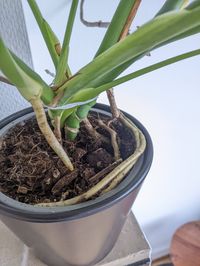
Roots that grow above the soil, common in orchids and monstera.
Aeration
The process of loosening soil to allow air circulation to the roots.
Acidity or pH levels
A measure of how acidic or alkaline the soil or water is, on a scale from 0 (very acidic) to 14 (very alkaline), with 7 being neutral.
Bottom Watering
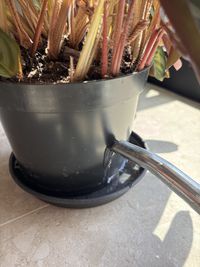
Watering a plant by placing the pot in a tray of water to absorb moisture from the bottom up.
Capillary Action
How water moves upward through soil or plant tissues, especially in self-watering systems.
Cultivar
A plant variety that has been produced in cultivation by selective breeding. Cultivars are usually bred for specific traits like leaf color, size, or disease resistance (e.g., Sansevieria trifasciata ‘Laurentii’).
Cutting
A piece of a plant (stem, leaf, or root) used to propagate a new plant.
Dormancy
A rest period where growth slows or stops, often in winter.
Drainage
The plant’s ability to remove excess water; essential to prevent root rot.
E - H
Epiphyte
A plant that grows on another plant (like orchids), not in soil.
Etiolation
Weak, leggy growth caused by insufficient light.
Family
A higher taxonomic category that includes one or more genera (plural of genus) with shared traits.
Fenestration
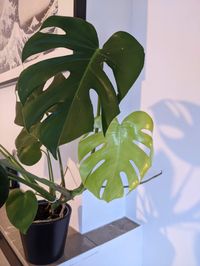
Natural holes or splits in leaves, most famously seen in Monstera deliciosa. Often an adaptation for light, water drainage, or wind resistance in a plant’s native environment.
Fertilizer
A substance that provides nutrients to plants.
Genus
A group of related plant species that share common characteristics.
Guttation
The exudation of water droplets from the edges of leaves, usually at night when soil is moist and humidity is high. It’s harmless but sometimes mistaken for overwatering.
Hardiness zone
A geographic area defined by climate, specifically the average minimum winter temperature.
Humidity Tray
A shallow tray filled with water and pebbles used to increase humidity around a plant.
I - O
Indirect Light
Light that doesn't hit the plant directly, preferred by many houseplants.
Inflorescence
A cluster or group of flowers arranged on a stem.
Leggy
Abnormally long, weak stems caused by insufficient light.
Light Burn
Damage to leaves due to exposure to intense, direct light.
Node
The part of a plant stem where leaves and roots can grow.
Overwatering
Excess watering, a common cause of houseplant death.
P - S
Peat Moss
A soil amendment used for water retention, often in potting mixes.
Petiole
The stalk that connects a leaf blade to the plant stem.
Propagation
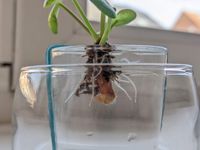
Plant propagation is the process of producing a new plant from an existing plant.
Sexual propagation is the process of reproduction of plants by seeds. The resulting plant is a genetic combination of each parent plant.
Asexual/vegetative propagation is the process of taking a piece of a (usually mature) plant and growing it into a new plant. The resulting plant is genetically identical to the parent plant and essentially a clone.
Usually when talking about propagation in the context of houseplants, one is referring to the asexual/vegetative variant of propagation and not the sexual variant.
Repotting
Transferring a plant to a larger pot or fresh soil.
Rhizome
A thick underground stem that can produce shoots and roots.
Root Bound
When a plant’s roots fill up the pot and circle around, limiting growth.
Root Rot
Fungal or bacterial decay due to overwatering or poor drainage.
Species
The most specific classification of a plant that can reproduce with others of the same kind.
Subspecies
A naturally occurring variation within a species, often region-specific, that can still interbreed with the main species.
T - V
Thrips
Tiny insects that feed on plant juices, often causing damage.
Transpiration
The process of water evaporation through plant leaves.
Turgor pressure
The pressure of water inside plant cells that keeps them firm and upright.
Variegation
Leaves with multiple colors or patterns (e.g., white and green).
Variety
A naturally occurring plant variation within a species (unlike a cultivar, which is human-made). Denoted by var. in scientific names (e.g., Aloe vera var. chinensis). Not as common in houseplants as cultivars.
W - Z
Wilting
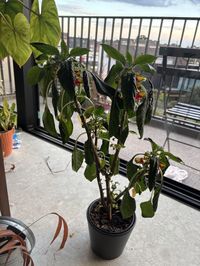
Drooping of leaves and stems, often from lack of water or root issues.
Xerophyte
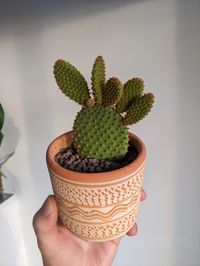
A species of plant that has adaptations to survive in dry environments with little liquid water (e.g., cacti).
Yellowing
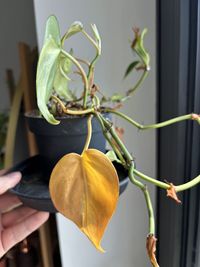
Leaves turning yellow, often a sign of overwatering, poor drainage, or nutrient deficiency.
